ES CA FR DE IT
ES IT
ES CA FR DE IT
ES IT
None

Artificial insemination

Assisted Reproduction Treatments

What is Artificial Insemination?

In which cases is Artificial Insemination indicated?

Artificial insemination is generally recommended for women up to 38 years of age.

With partner's or conjugal semen
With donor semen

Success Rates of Artificial Insemination

  • The chances of pregnancy depend primarily on the patient's age and the number of follicles that develop during the cycle.
  • With ovarian stimulation and intrauterine insemination, the chances of pregnancy per cycle are approximately 20%.
  • After four cycles, approximately 70% of patients achieve this.
18 %
Insemination
Average pregnancy rate per cycle
Artificial insemination during marital intercourse
26 %
Insemination
Average pregnancy rate per cycle
Artificial insemination with a donor

What are the phases of Artificial Insemination?

First visit with an Assisted Reproduction specialist

First visit + Medical orientation + Medical tests

Carrying out the treatment
 

Ovarian stimulation + Gynecological check-ups + Semen sample preparation + Insemination

What is the insemination process like?

The day of insemination

What happens on the day of insemination?

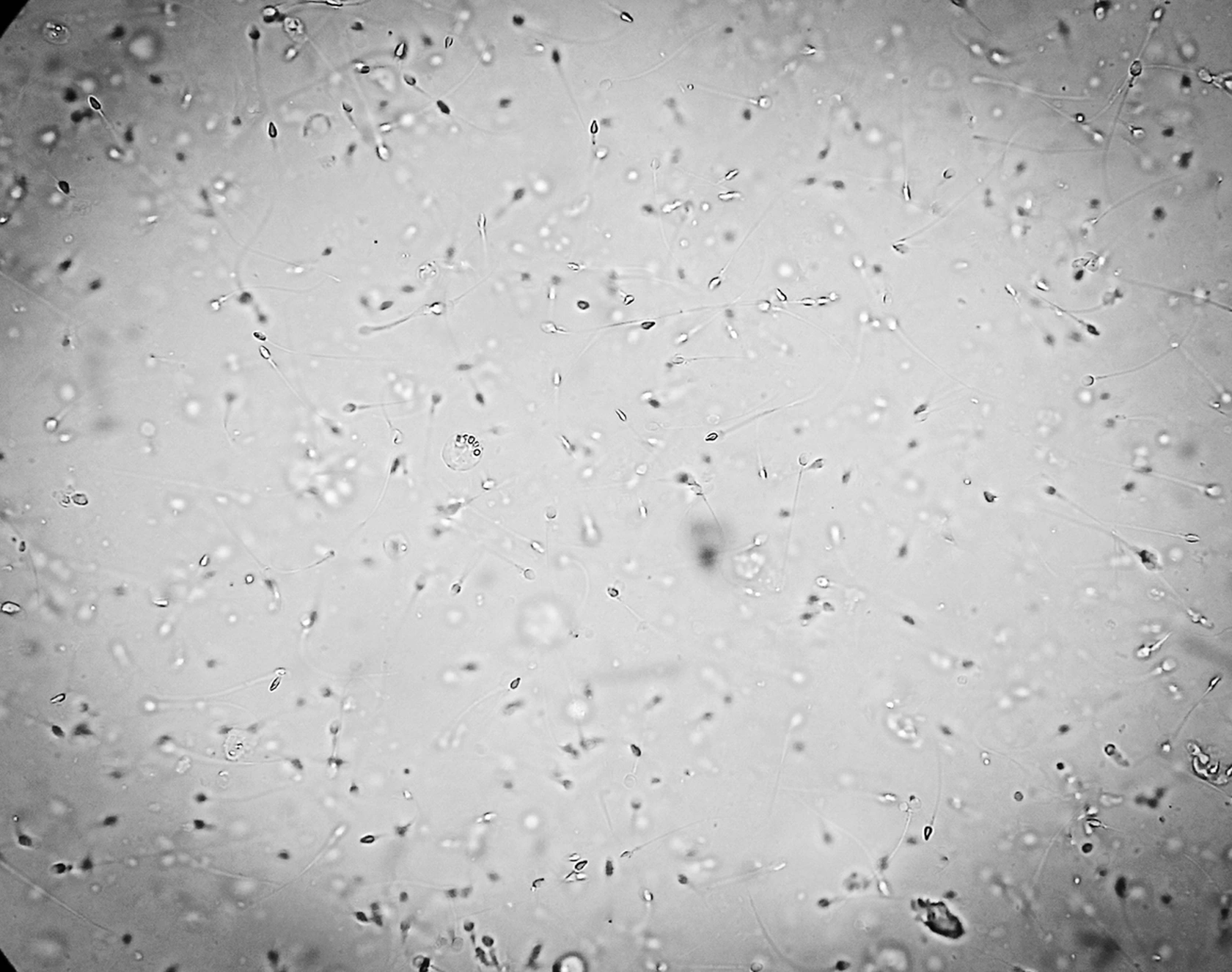
The man collects a semen sample at home and delivers it to Institut Marqués in less than an hour. In the semen laboratory, the sample is prepared using a gradient technique that separates the seminal plasma and enhances and concentrates the motile sperm. Two hours later, the insemination takes place in the office. The patient is placed in the gynecological position, and a fine cannula is inserted through the cervix to deposit the sperm into the fundus of the uterus. Within a few minutes, the sperm will have reached the fallopian tubes, where the egg is waiting.
It is not uncomfortable, lasts a few minutes, and does not require rest afterward.

How many inseminations are performed in each cycle?

With the treatment regimen we use at our Center, only one insemination per cycle is necessary. The insemination must be synchronized with ovulation (it should be done within a few hours). If ovulation has already been completed 24 hours or the semen arrives 24 hours before, it is unlikely that the goal will be achieved.

Can intrauterine insemination be performed without preparing the semen in the laboratory?

No. It is necessary to prepare the semen before insemination to eliminate substances called prostaglandins, which, if not removed, can cause painful uterine contractions and impair the success of the technique.

How is donor semen prepared?

In a donation, the semen is always frozen because the donor's blood tests must be repeated 6 months after obtaining the sample. This way, any infectious diseases are ruled out. At our center, all inseminations are performed intrauterinely and the semen is potentiated in the laboratory. Despite being of very good quality, semen can lose mobility during the freezing and thawing processes, so the results are much better if it is potentiated after thawing.

How is an intrauterine insemination cycle performed?

The process consists of three phases:

  • Ovarian stimulation phase
  • Intrauterine insemination itself
  • Luteal phase support
     

What is ovarian stimulation?

It consists of inducing multiple ovulation using hormonal medications. During the spontaneous menstrual cycle, many follicles begin to develop within each ovary, but when one of them reaches a slightly larger size, the growth of the others is inhibited. The treatment aims to encourage 1 to 4 follicles to develop to full maturity, depending on the patient's age and cycle number.

What is a follicle?

It is the location in the ovary where the oocyte, i.e., the female reproductive cell, develops. During the first phase of a woman's menstrual cycle, follicle development occurs: It begins microscopic in size and grows to about 22 mm, filling with fluid containing nutrients for the oocyte. At that moment, a hole opens in its wall, and the oocyte emerges. This is ovulation.

How long does the ovarian stimulation phase last?

Typically, the treatment lasts for 9-14 days. During these days, the patient will receive a subcutaneous injection and a nasal spray every day.
 

What is the most appropriate medication regimen for each patient?

The regimen is established primarily based on the patient's age, ovarian morphology, hormone analysis, body weight, response to stimulation in previous cycles, if any, and our experience.
We believe it is very important to prescribe the most appropriate medication and dosage for each woman, individualizing each case and avoiding standard treatment regimens. Each patient has unique characteristics.
Our Center is a pioneer in the use of combined medication (nasal GnRH analogues and subcutaneous gonadotropins), which achieves better results.

What risks do these medications pose?

Many studies have been conducted regarding possible diseases and cancer risks associated with receiving these drugs; however, there is currently no scientific evidence that these drugs cause subsequent pathology.
If an excessive response occurs, it can lead to ovarian hyperstimulation syndrome, but with the doses prescribed for insemination and the monitoring performed, this is rare.
 

Can insemination be performed without ovarian stimulation?

Yes, but the chances of pregnancy are lower. For this reason, at our center, we only do it this way in special cases.

What do stimulation check-ups involve?

A vaginal ultrasound is performed to observe the number and size of developing ovarian follicles.
Based on these tests, the medication dose is adjusted, and the next check-up is scheduled 1 or 2 days later. When the follicles have reached a diameter of 18–20 mm, an HCG injection is indicated. This hormone induces the final changes in maturation and ovulation.
It is important that the treatment impact the patient's life as little as possible; therefore, we make check-ups as easy as possible so that the patient can come in for an appointment at her preferred time, between 9 a.m. and 8 p.m.
No follow-up tests are required; they are only requested in very specific situations.


Pregnancy test

Beta wait + Pregnancy test

The days following insemination

Is any treatment necessary after insemination?

Treatment with a progesterone ovule (vaginal suppository) every 12 hours for 11 days is indicated. The goal is to optimally prepare the endometrium to receive the embryo. The 14 days following ovulation are called the luteal phase.

What lifestyle is recommended from insemination to the pregnancy test?

You can lead a completely normal life. Once insemination is performed, there are no further checkups; you just have to wait. Often, as the day of the pregnancy test approaches, the patient feels increasingly nervous; it is important to be psychologically prepared for these days of high anxiety and to maintain a particularly close bond with your partner.

How do we select sperm donors?

The donor is personally selected by the doctor to ensure the most suitable match for each patient. Blood type and RH are taken into account, as well as the physical characteristics of the prospective parents (eye color, hair color, skin color, etc.), as well as their hereditary character traits.

Donors undergo a comprehensive medical examination and laboratory test, including a karyotype, tests to rule out infectious diseases, and specific tests to rule out the most common mutations in the European population.

They also undergo periodically repeated blood tests to detect sexually transmitted diseases, a family medical history to rule out possible diseases, tests to detect chromosomal abnormalities in the ejaculate (FISH in sperm), and a thorough sociological and psychological assessment.

None

Artificial Insemination Prices

Artificial insemination

What's included?
  • Cycle guidance, scheduling, and medical follow-up
  • Ovarian stimulation
  • Blood tests and evaluation
  • Operating room and outpatient hospitalization costs
  • Andrology laboratory services
  • Semen sample processing
  • Sperm sample preparation for insemination
  • Follow-up of the process up to the 8th week of pregnancy
  • Pregnancy testing
  • Medical support and ultrasound follow-up
  • The cost of medication is not included in the treatment.
  • If donor sperm is required, the price is subject to an additional €400.
835€

FAQs Artificial Insemination

What is the difference between artificial insemination and in vitro fertilization?
How much does artificial insemination cost?
Is artificial insemination painful?
What tests are necessary before undergoing artificial insemination?
How is ovarian stimulation performed?
How is the semen prepared for insemination?
Is it possible to use donor sperm?
Is it necessary to rest after insemination?