
Category
Dec 4, 2025

When a couple faces difficulties conceiving, attention often focuses on the woman. However, biological reality differs: in 40-50% of cases, the male factor is a determining cause.
Receiving an infertility diagnosis can be a blow to self-esteem, but at Institut Marquès, we have a clear message: a poor sperm analysis does not mean sterility. Thanks to advances in andrology and embryology, today we can achieve healthy pregnancies even in the most severe cases.
In this article, we will translate the complex medical terms in your report and show you the path to fatherhood.
Everything starts with a sample. The spermiogram (or semen analysis) is the map that tells us which path to take in the laboratory. We do not look for "perfection," but for reproductive potential.
What does the Spermiogram analyze? It is the fundamental diagnostic test that evaluates semen quality based on three pillars: Quantity (concentration), Motility (how they swim), and Morphology (their shape).
To ensure the best possible sample, Institut Marquès offers the Erotic Personal System (EPS) for sample collection, which has been proven to improve volume and sperm quality compared to traditional methods.
For a natural pregnancy to occur, millions of sperm start a race, but only one arrives. If there are few or they are slow, the race becomes complicated.
Oligozoospermia (Few Candidates)
Quick Definition: We diagnose Oligozoospermia when the sperm concentration is low (less than 15 million per milliliter). It is purely a "quantity" issue.
The Solution: In conventional IVF, this would be a problem. But with the ICSI technique (where we inject the sperm), theoretically, we only need one viable sperm for each egg. Quantity stops being an insurmountable obstacle.
Asthenozoospermia (Difficulty Moving)
Quick Definition: This refers to low motility. If the sperm are alive but do not move progressively (less than 32%), they will not be able to travel from the uterus to the tubes to fertilize the egg.
The Solution: In the laboratory, we don't ask them to swim that marathon. We take them directly to the goal using micromanipulation.
Sometimes, the quantity is correct, but the "architecture" of the sperm fails.
Quick Definition: Teratozoospermia occurs when the vast majority of sperm (>96%) have abnormal shapes: defects in the head, neck, or tail. These malformations can prevent the sperm from penetrating the egg's outer layer.
How do we overcome it? Here, technology is vital. We use high-magnification microscopes (IMSI technique) to examine sperm in impressive detail, selecting those with perfect morphology for fertilization.
It is the diagnosis that scares the most, but it requires deep analysis before losing hope.
Quick Definition: It is the total absence of sperm in the ejaculate. It can be obstructive (there is a "factory" but the ducts are blocked, such as after a vasectomy) or secretory (production problems).
Sperm "Rescue" (Biopsy/TESE): Just because they don't appear in the ejaculate doesn't mean they don't exist. Through a Testicular Biopsy (TESE), a simple intervention, our urologists can often retrieve sperm directly from the testicle to use immediately in an ICSI cycle.
What if the semen analysis looks normal, but pregnancies stop or IVF fails? Sometimes, the problem is "inside" the sperm's head.
What is DNA Fragmentation? These are breaks in the sperm's genetic chain. A sperm with fragmented DNA can fertilize, but the resulting embryo usually has poor quality, causing implantation failures or early miscarriages.
The Solution: In these cases, we use advanced sperm selection techniques (such as microfluidic chips) to separate healthy sperm from damaged ones.
All the previous conditions (low quantity, bad shape, reduced mobility) converge on a star solution that has revolutionized reproductive medicine.
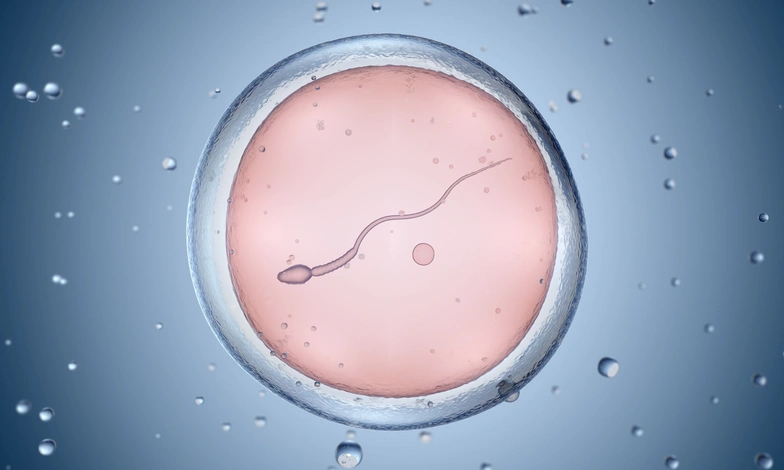
Quick Definition: ICSI Intracytoplasmic Sperm Injection (ICSI) is a high-precision laboratory technique. Instead of mixing eggs and sperm in a dish (classic IVF), the embryologist selects the best sperm and delicately introduces it inside the egg. Thanks to ICSI, male factors that prevented fatherhood decades ago now have success rates comparable to any other IVF treatment.
Can I improve my sperm quality with diet? Yes, to some extent. Sperm regenerates every 70 days. A diet rich in antioxidants, quitting smoking, and avoiding excessive heat in the testicular area can improve mild parameters, especially DNA fragmentation.
Does ICSI increase the risk of genetic problems? No. Studies confirm that the technique itself is safe. If there is any genetic risk, it is usually associated with the underlying cause of the father's severe infertility, not the laboratory procedure.
If I have a vasectomy, do I need a donor? Generally, no. We can aspirate sperm directly from the testicle (Biopsy/TESA). Those sperm are suitable for performing ICSI with your partner's eggs.